Executive summary
THEIA brings the working context of pipeline integrity teams into one SaaS workspace. It connects source data, engineering records, asset relationships, geographic context, and the actions that follow a review.
From data to context
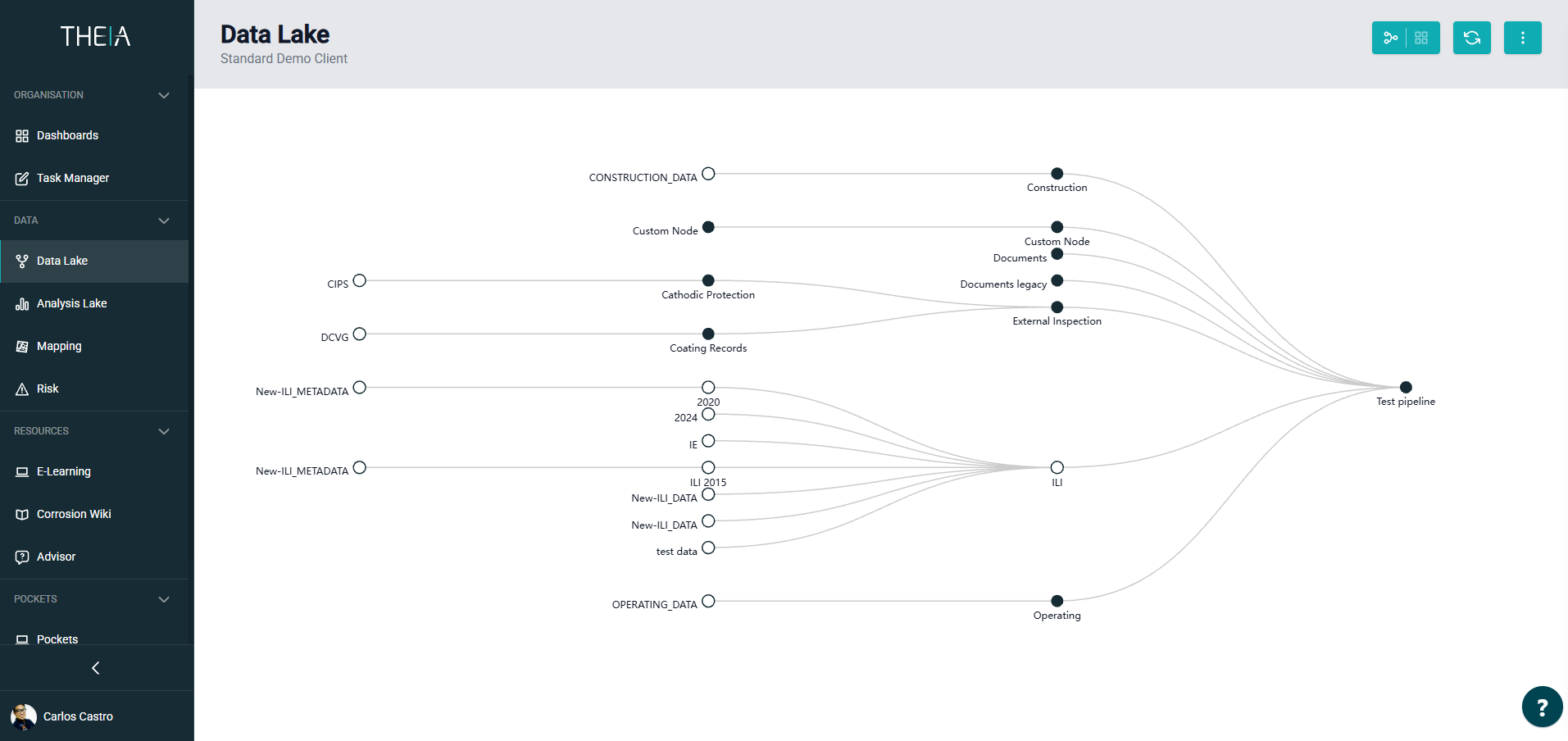
The Data Lake provides a visible path from incoming datasets through interpreted and organised data to the pipeline context where it can be used. This supports lineage and makes the state of the data easier to understand before it reaches an engineering decision.
From records to spatial review
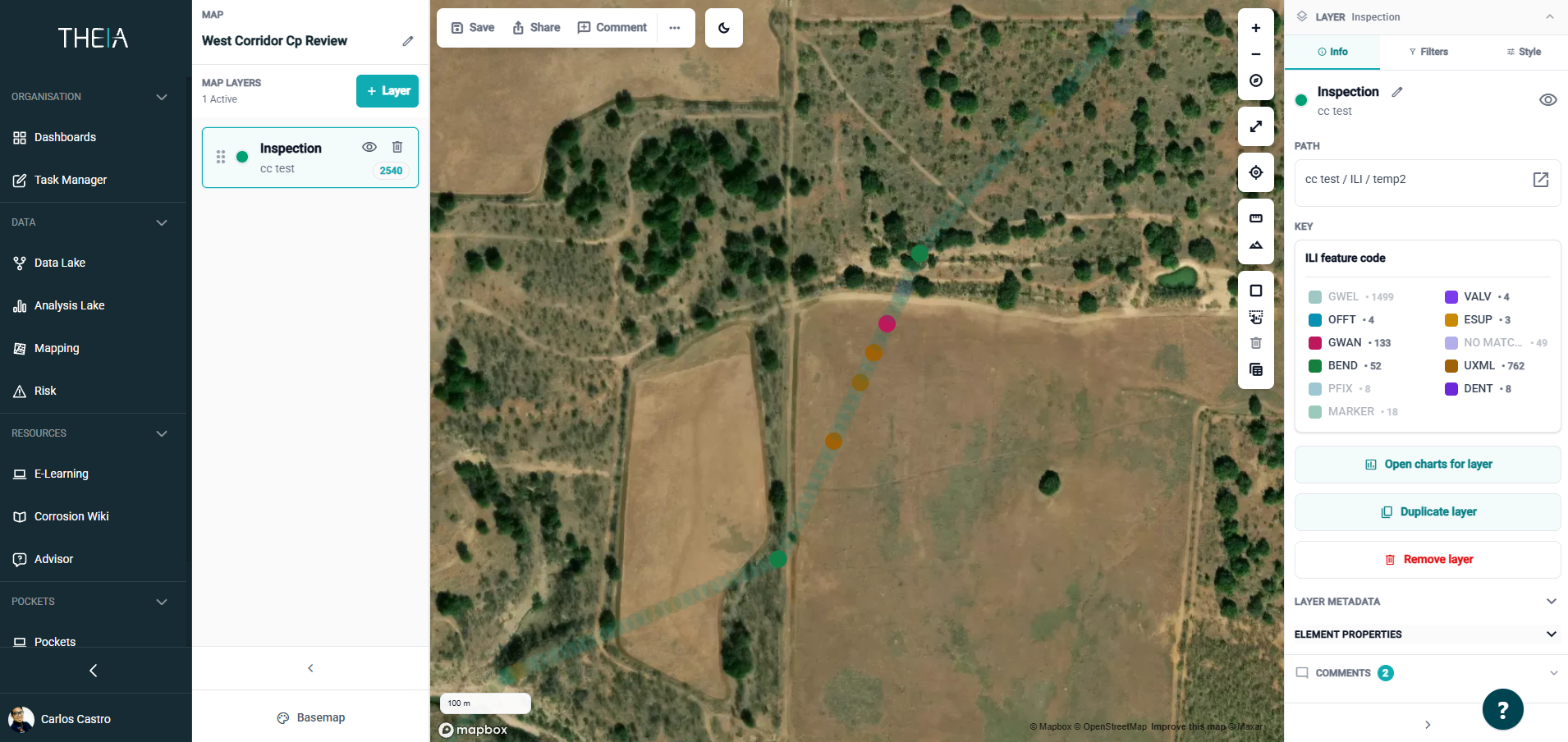
The Mapping workspace places inspection and asset information on a geographic view. Engineers can work with layers, feature codes, metadata, visibility, styling, and comments while keeping the map connected to the underlying records.
Executive scope across the platform
THEIA is designed as an end-to-end operating environment for asset integrity, not only as a map or data store. Its functional surface covers the full path from organisational setup to engineering follow-through:
- Organisation and collaboration: workspaces, teams, roles, permissions, shared context, and personal user settings provide the governance layer for client and project operations.
- Dashboards and task management: operational dashboards surface current work and indicators, while the Task Manager turns findings into assigned, prioritised, traceable actions with status and ownership.
- Data Lake and Analysis Lake: source files, metadata, interpreted fields, structured records, and analytical datasets remain discoverable and connected. The data layer supports ingestion, lineage, quality checks, and a progression from raw material to usable engineering insight.
- Mapping and asset context: map layers, paths, feature codes, filters, styling, metadata, comments, and geographic context let teams inspect assets spatially and relate map features back to engineering records.
- Risk and integrity workflows: inspection evidence and asset information can be assessed in risk-oriented workflows, helping teams compare conditions, focus attention, and carry decisions into planned engineering work.
- Engineering knowledge and assistance: resources such as the Corrosion Wiki, E-Learning, Advisor, and reusable Pockets support guidance, repeatable analysis, and access to domain knowledge alongside operational data.
- Traceability and security: controlled access, structured records, comments, and linked actions preserve why a decision was made, by whom, and against which evidence.
Together, these capabilities create a connected workflow: teams configure their workspace, ingest and interpret source material, relate records to assets, review them geographically, assess risk, consult engineering guidance, and manage the resulting work. The executive value is a shared, auditable view of integrity decisions rather than isolated files, maps, and follow-up tasks.